In early childhood education, every choice you make (what activities to plan, how to group children, where to focus your energy) has a ripple effect on learning. But how do you know those choices are moving each child forward? The answer: data.
Not the kind of data that sits in a binder until the end of the year, but real, day-to-day information about children's learning and development that can shape your teaching in the moment.
Step 1: Decide What to Track (and Why)
Before collecting data, get clear on your purpose.
Are you…
- Identifying which skills to focus on this month?
- Tracking social–emotional growth over the year?
- Measuring the impact of a new classroom routine?
When you know the "why," it's easier to choose the "what." For example:
- If you're targeting literacy, you might track how often children recognize their names in print.
- If you're building fine motor skills, you might note progress in scissor use or block stacking.
Step 2: Make Collection Part of Your Day
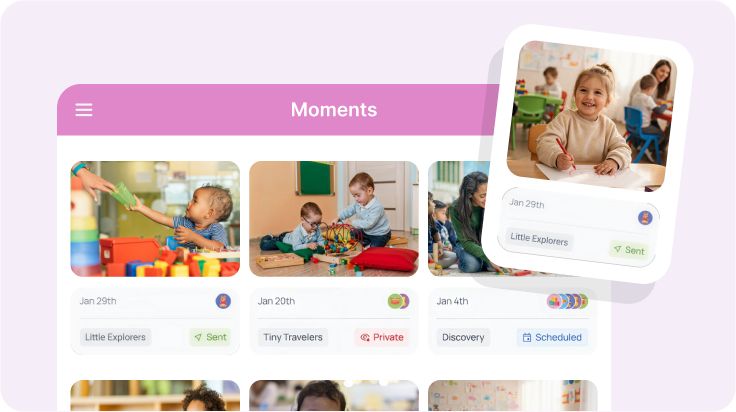
The best data is collected in context, during daily routines and activities — not just during assessments. That could mean:
- Writing a quick observation on a sticky note during art
- Taking a photo of a block tower during free play
- Recording a short voice note after circle time
The key is to make it fast and sustainable, so you capture moments without losing teaching time.
Step 3: Look for Patterns
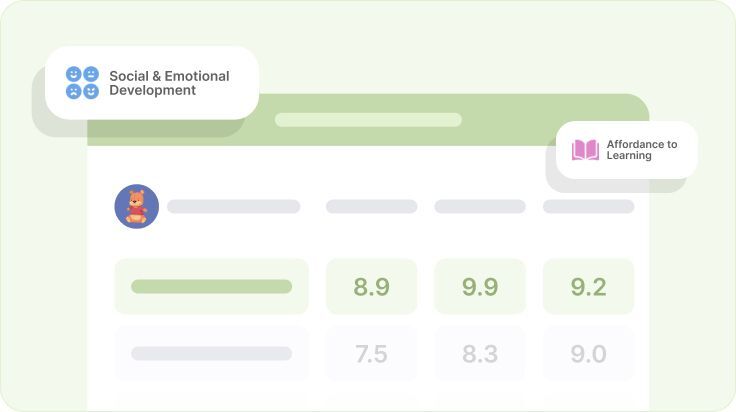
Data is most valuable when it tells a story. Once you've collected observations, look for trends:
- Are multiple children struggling with the same skill?
- Has one child's progress plateaued in a certain area?
- Do certain activities seem to spark more engagement?
These patterns can guide decisions about grouping, introducing new materials, or adjusting your lesson sequence.
Step 4: Adjust Instruction
- If your data shows several children need support in counting to 10, you might add more counting games to transitions.
- If you notice a child mastering a skill faster than expected, you can offer them more challenging activities.
- If engagement spikes outdoors, you might move a literacy activity to the playground.
Step 5: Share Insights
Data shouldn't stay in the classroom — it's most powerful when shared with:
- Families to celebrate progress and set shared goals
- Colleagues to coordinate support and share strategies
- Administrators to inform resource allocation and professional development
How Kaymbu Can Help
While you can track and analyze data in many ways, Kaymbu is designed to make this process seamless.
- Capture observations instantly with photos, videos, or notes.
- Organize them automatically into portfolios or reports.
- Filter by child, skill, or time period to see clear trends.
- Access research-backed frameworks like COR Advantage's 36 items to ensure your data aligns with developmental milestones.
Instead of wrestling with spreadsheets or paper notes, you get clear, actionable insights — freeing you up to focus on the teaching, not the tracking.
Data doesn't replace intuition — it enhances it. When you combine what you see in your classroom with what your data shows, you get a fuller, clearer picture of each child's learning journey.
Whether you use a notepad, a spreadsheet, or a platform like Kaymbu, the goal is the same: turn everyday moments into meaningful, informed instruction.