There’s a certain kind of Sunday-night feeling that most educators know well. You’re thinking about the week ahead, the activities you want to try, the moments you hope to notice and capture, and the million little things that somehow all need to fit into five short days.
Good instructional planning doesn’t mean overloading your week with more tasks or more paperwork. It means creating just enough structure so your days feel calmer, more intentional, and easier to manage — while still leaving room for flexibility and real-life classroom moments.
Here’s a simple, realistic way to think about organizing your week around instructional planning.
Start With the Big Picture (Before You Think About Monday)
Before you open a calendar or start listing activities, take a moment to zoom out.
Ask yourself:
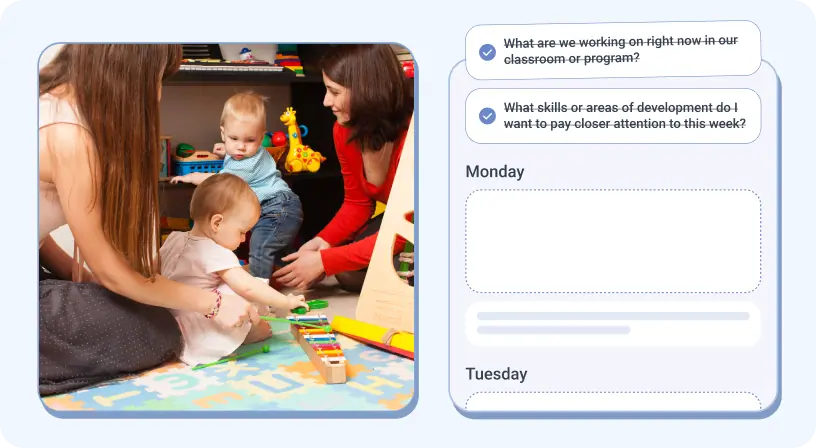
- What are we working on right now in our classroom or program?
- What skills or areas of development do I want to pay closer attention to this week?
- Are there any ongoing projects, themes, or interests the children are especially engaged in?
This big-picture thinking helps your week feel purposeful instead of just reactive.
Break the Week Into Simple Focus Areas
Instead of trying to plan every minute of every day, try giving each day (or part of the week) a loose focus. For example:
- A day to introduce something new
- A day to revisit and deepen exploration
- A day to observe and document more intentionally
- A day to reflect, extend, or wrap things up
This approach keeps your week balanced and prevents everything from piling up at once.
Keep Your Plans Flexible (Because Real Life Happens)
The best plans are the ones that can bend.
Maybe an activity takes off and deserves more time. Maybe a day goes sideways. Maybe something unexpected becomes the most meaningful learning moment of the week.
Your instructional plan should support your work, not box you in. Think of it as a living guide that you can adjust as the week unfolds.
Plan Activities, But Plan for Observation Too
It’s easy for planning to become a list of activities. But some of the most important work happens when you’re watching, listening, and noticing what’s actually happening in your classroom.
When you organize your week, try to intentionally plan for:
- Times when you’ll focus on observing and documenting
- Moments when you’ll check in on specific areas of development
- Opportunities to capture learning as it naturally unfolds
With Kaymbu, many educators use their planning tools alongside their observation and documentation tools so planning and capturing learning live in the same place — making it easier to connect what you planned with what actually happened.

.webp)
.webp)